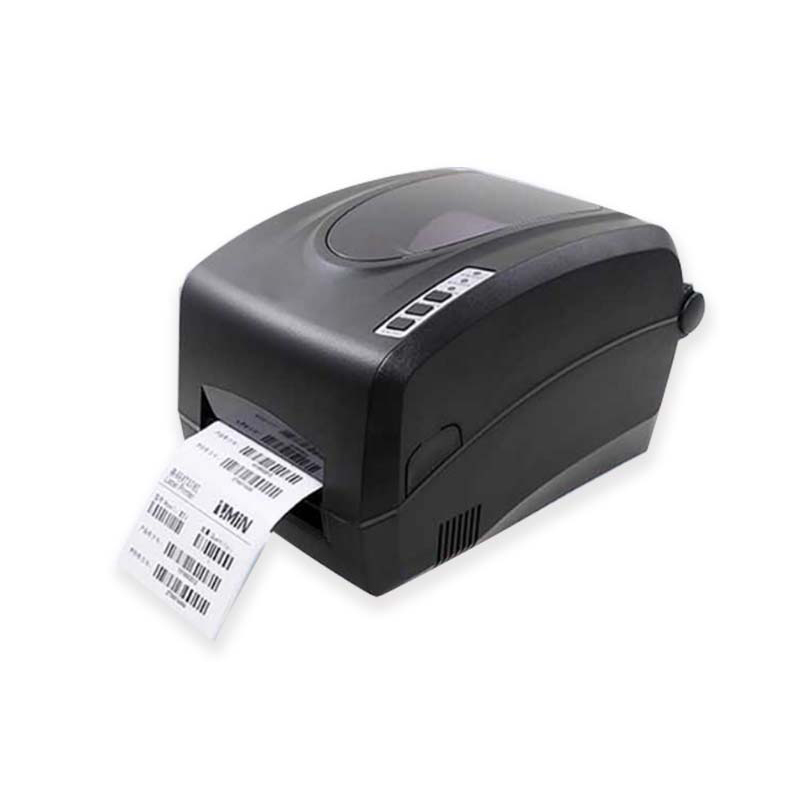
Vehicle Management Solutions
You will find the answers here →
If you are a manager responsible for smart city transportation or large park operations and face challenges such as parking congestion, toll disputes, and blind spots in vehicle tracking, you may already be thinking: how can simpler, more reliable technology be used to achieve efficient control of vehicles across the entire area?
In fact, a purely passive UHF RFID technology is becoming the ideal choice for digital vehicle management with maturity beyond imagination. Through a small electronic tag and a precisely deployed read/write network, it can achieve "Access - tolling - parking - trajectory auditing - security controlfull-scenario coverage. This not only completely eliminates reliance on high-cost active devices, but also represents vehicle management entering a new stage of all-domain perception and data-driven operation.
Next, we will systematically explain how this solution reshapes parking, tolling, dispatch and security processes. You will find that building a unified, intelligent and sustainable vehicle management system is simpler and more feasible than expected.
RFID vehicle management application scenarios
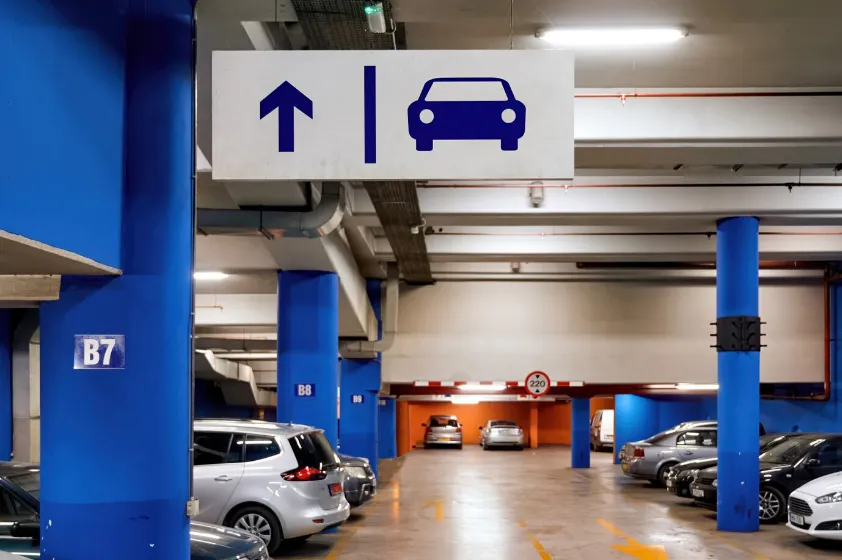
Intelligent parking management
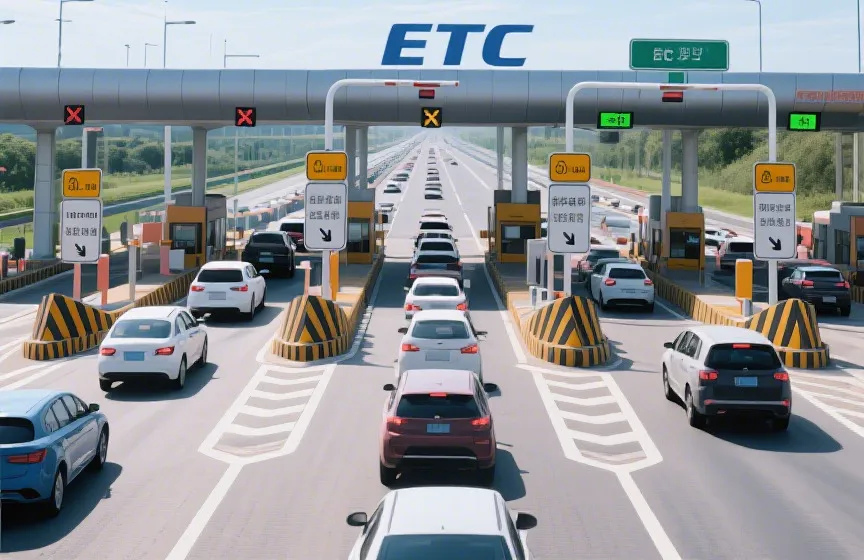
Highway Electronic Toll Collection (ETC)
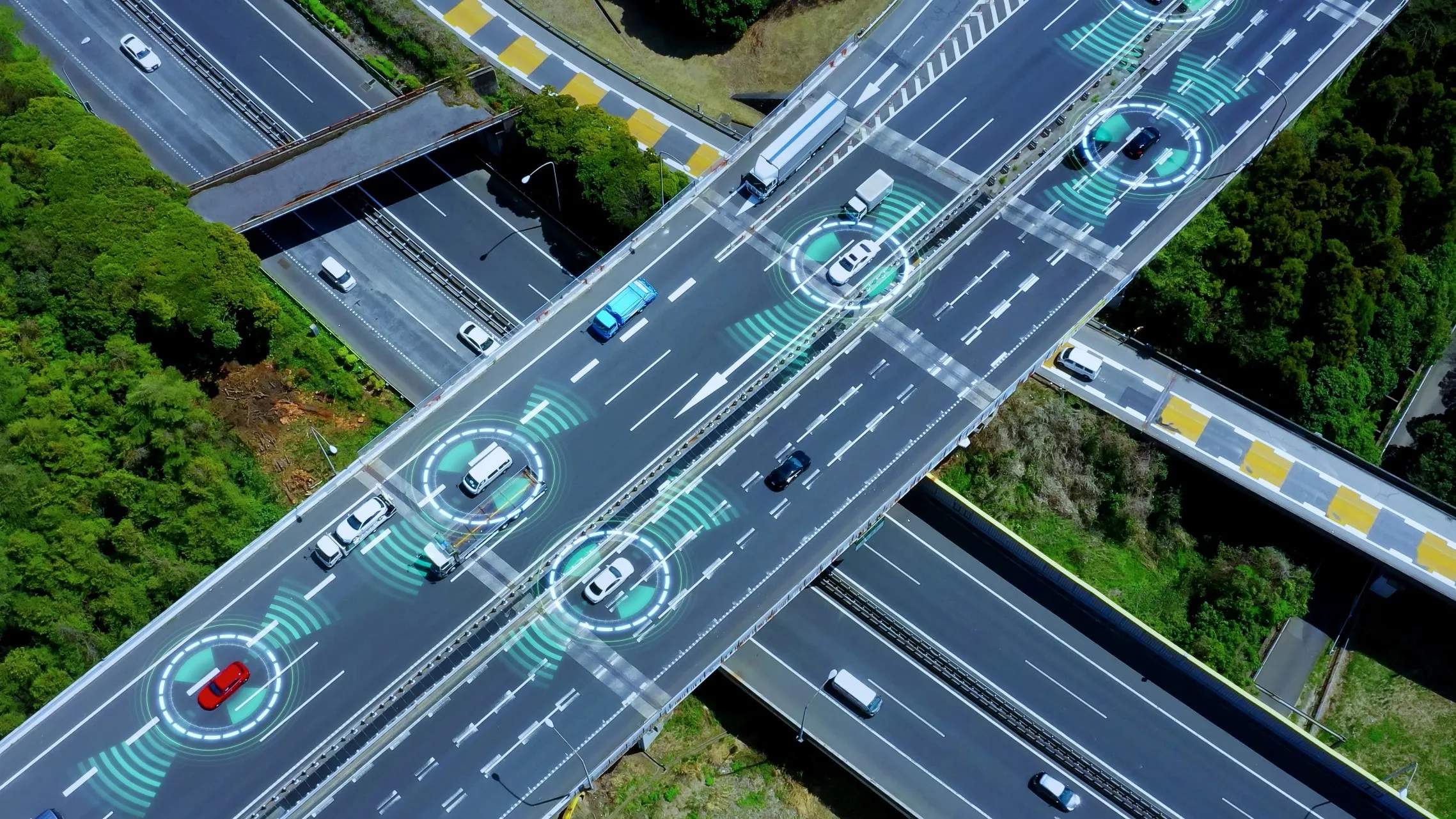
Fleet Tracking
Asset anti-theft
Introduction to the RFID Vehicle Management Solution
The core of this solution is to assign a passive UHF RFID tag to each managed vehicle as its globally universal "digital identity credential." By deploying dense UHF RFID read/write points at physical locations such as parking lots, key road nodes, and park entrances and exits, a "node-based sensing network" is built.
When a tagged vehicle passes any read/write point, the system can capture its identity information and precise timestamp automatically and contactlessly within milliseconds. By aggregating the appearance records of vehicles at multiple discrete nodes, the system can reliably reconstruct their macro driving trajectories, calculate regional dwell times, achieve precise path-based billing, and complete entry/exit access control, fully realizing intelligent management upgrades based on passive sensing.
Smart vehicle management usage process
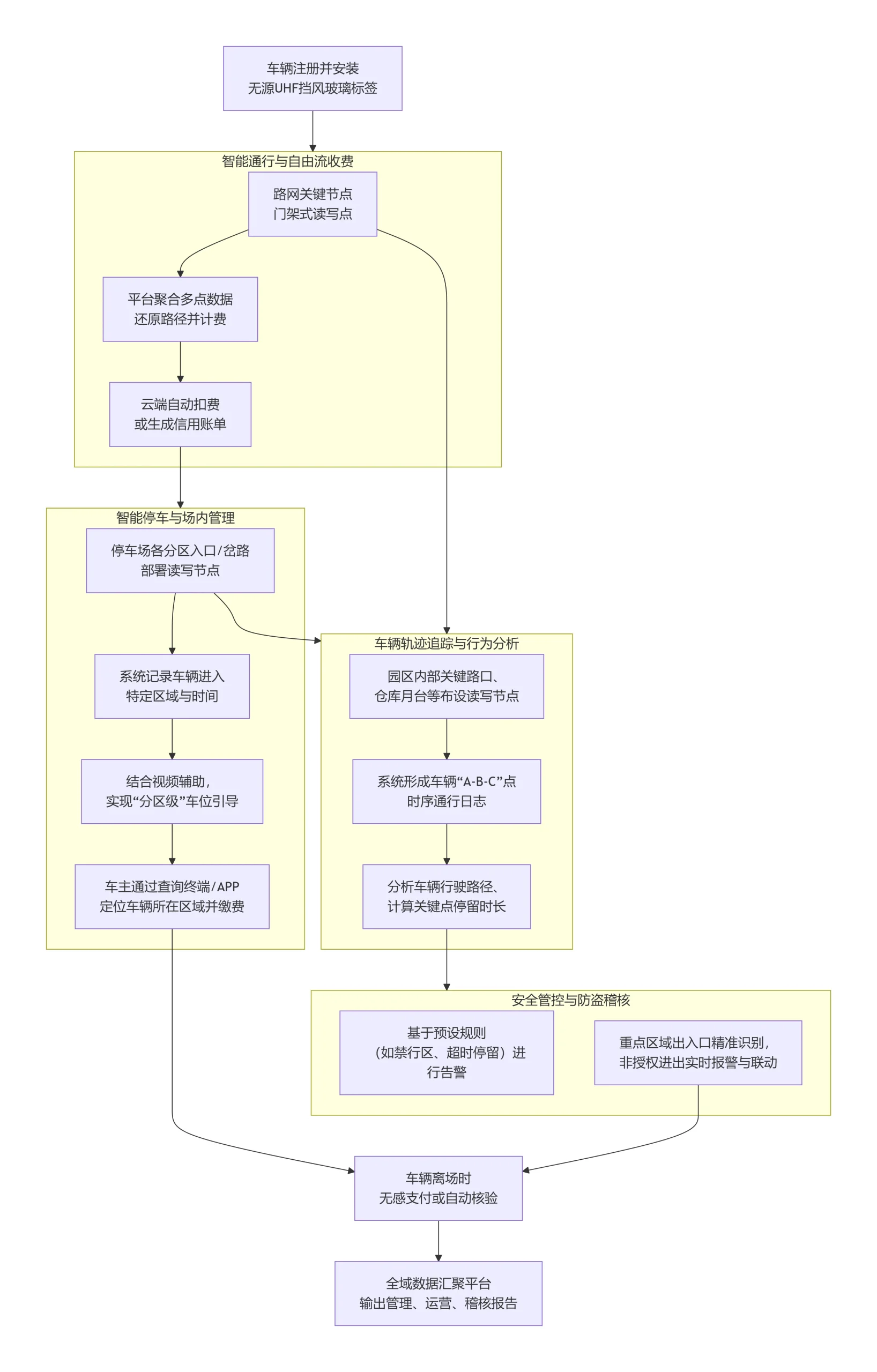
This solution collects discrete vehicle passage events through read/write nodes deployed at key geographic locations, thereby building a complete digital management process.
Specifically, this intelligent process includes the following steps:
Smart Parking Management:
- Zone-level guidance and passage records: Deploy read/write points at the entrance of each floor and main forks in the parking lot. When vehicles pass, their entry zone and time are recorded, and this can be combined with parking space video detectors to achieve zone-level parking space guidance. By entering the license plate number at a query terminal, the approximate area where the vehicle is located (such as "B2 East Zone") can be quickly obtained.
- Seamless payment and duration verification: Upon exit, the system accurately calculates the parking duration and automatically deducts the fee. Meanwhile, through the RFID records at the entrance and exit, the parking time can be strictly verified, eliminating the "tailgating" loophole of traditional IC cards.
2. Highway/Urban Road Free-flow Non-stop Tolling:
- Path identification and billing: Set up RFID gantry read/write points at key nodes of the road network (such as interchanges and ramps). Vehicles are recorded as they pass through different nodes, and the system accurately reconstructs their travel path based on the sequence of passages and performs precise billing according to the path, perfectly supporting complex strategies such as segmented billing and differentiated tolling.
3. Fleet tracking and refined management:
- Electronic fence (zone) management: By deploying read/write points at the entrances and exits of a zone's boundaries, vehicle entry and exit behavior can be precisely monitored. The system can issue real-time alerts when unauthorized vehicles enter or authorized vehicles leave illegally.
4. Vehicle Asset Anti-theft and Violation Monitoring:
- Key node logs and path reconstruction: Read/write points are deployed at key intersections, warehouse docks, gas stations, and other locations within parks, ports, and logistics parks. Each time a vehicle passes, a time-stamped record is generated. By analyzing these discrete but ordered records, the system can reconstruct the vehicle's driving trajectory within the park and calculate its dwell time in specific areas (such as loading and unloading zones) for efficiency analysis and scheduling optimization.
- Abnormal behavior auditing: Combined with vehicle trajectory data, the system can automatically identify and alert on behaviors such as abnormally long stays (e.g., in remote corners), unauthorized entry into restricted areas, and failure to follow predetermined routes, and link with on-site video for verification.
- Precise entrance and exit control: Deploy high-sensitivity read/write devices at the entrances and exits of key areas (such as high-risk cargo storage areas and private garages) to achieve precise verification of vehicle identities, prevent impersonation, and issue instant alarms for illegal intrusions.


We understand the issues you care about →
Pain Points Solved
| Core pain points | RFID Solutions |
|---|---|
| Highway tolling relies on manual labor or dedicated ETC equipment, and efficiency and coverage need improvement | Accurate billing on free-flow paths: Using existing UHF RFID tags, multi-node identification enables seamless path reconstruction and tolling, with flexible deployment, and can serve as an effective supplement or upgrade to existing systems. |
| Vehicle locations in parking lots are unknown, resulting in a poor reverse car-finding experience | Zone-level positioning and vehicle-finding assistance: By reading and writing records at key nodes within the venue, vehicles are located to a specific zone (floor/sub-area), greatly narrowing the search range and significantly improving vehicle-finding efficiency. |
| Fleets are untraceable across vast areas, with many dispatch blind spots | Discrete trajectory tracking and dwell analysis: Through passage logs at key points, reliably reconstruct the vehicle's macro driving path and dwell duration at key nodes, providing a data basis for scheduling. |
| Vehicle asset anti-theft relies solely on video, which cannot proactively warn of non-intrusion risks | Intelligent Auditing of Abnormal Behaviors Based on Trajectories: Automatically analyzes and alerts on behaviors such as abnormal stops and deviations from planned routes, transforming passive monitoring into proactive risk warning. |
| Multiple vehicle management systems operate independently, with fragmented data | "One Tag All Access" full-domain data fusion: A single UHF tag runs through all scenarios, and data is uniformly aggregated into one platform, enabling all-dimensional analysis from access and parking to movement trajectories. |
RFID Empowerment Results
1, improved passage efficiency and management precision:
At free-flow road tolling points, passage efficiency is improved by more than 300%, with no physical lane restrictions.
Payment disputes at parking lot exits reduced by 95%, and average vehicle departure time shortened to within 10 seconds.
Analysis of fleet area turnover and operational efficiency is backed by reliable data, and the degree of refined management has improved significantly.
2, significant economic benefits:
Optimal hardware cost:Completely based on passive tags and a network of read/write points, there is no need to equip each vehicle with an expensive terminal, resulting in a low total cost of ownership (TCO).
Eliminate charging loopholes:Accurate path and time records completely close the loopholes in traditional parking cards and manual toll collection, providing strong revenue assurance.
Enhanced asset security:Through trajectory audit and early warning, it can effectively prevent asset loss risks caused by internal collusion, non-compliant operations, etc.
3, data value and service upgrades:
Providing operators with a comprehensive data decision dashboard covering safety, efficiency, cost, and service, achieving a data value leap from "whether there is entry or exit" to "where they come from, where they go, and how long they stay."
providing vehicle owners with a premium experience of seamless passage, fast vehicle locating, and transparent billing.
Provides operators with a comprehensive data decision dashboard covering security, efficiency, cost, and service
Related product recommendations
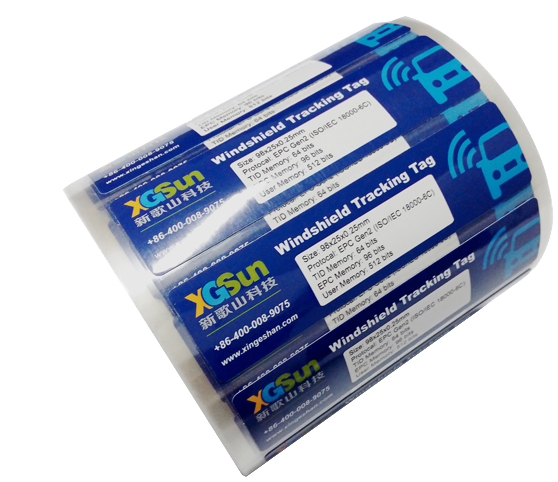
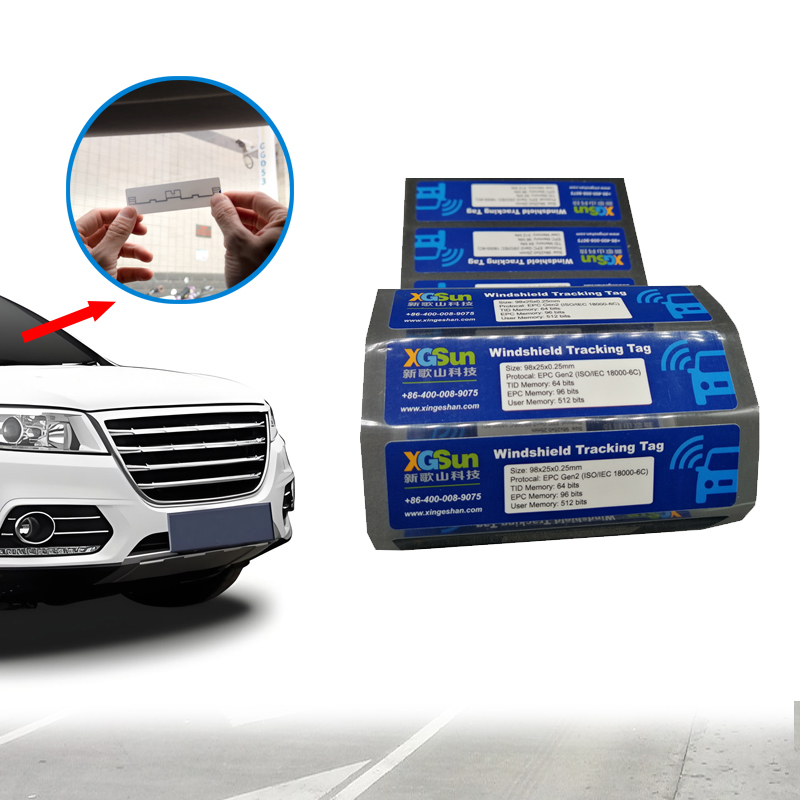
RFID Windshield Tag
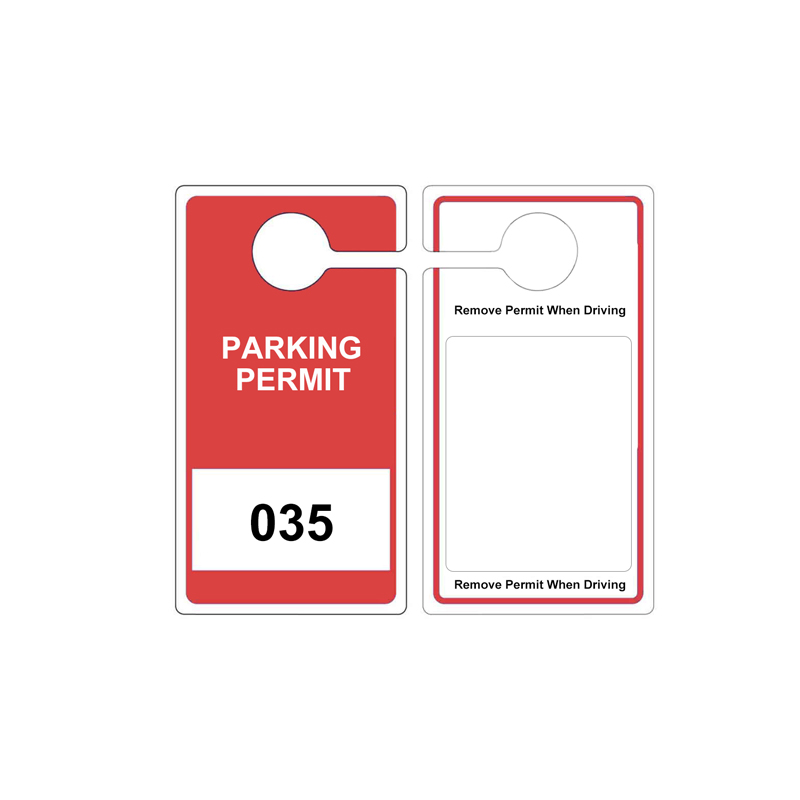
RFID parking hang tags
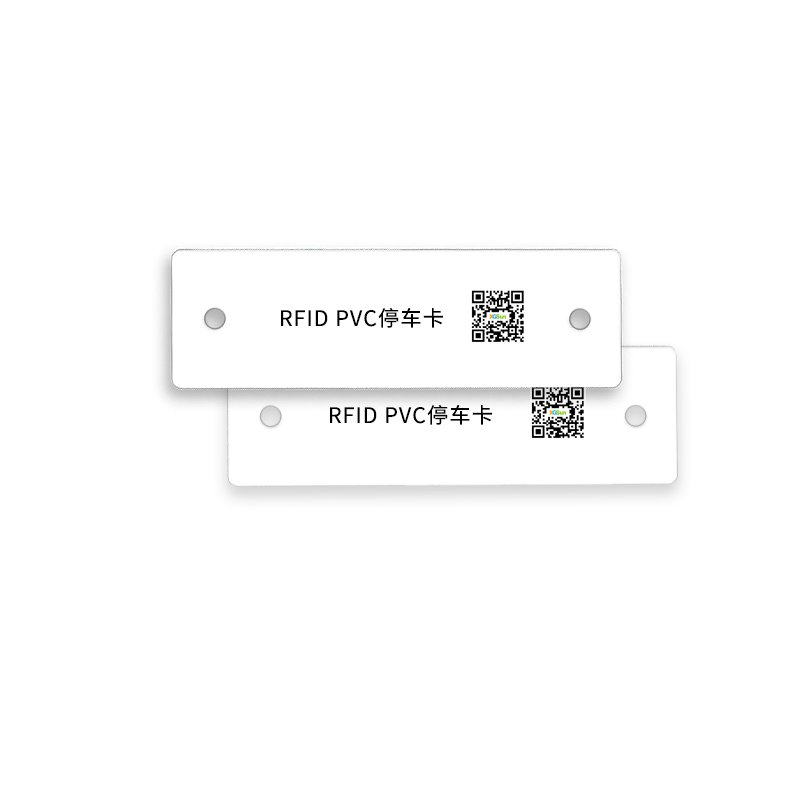
RFID PVC Parking Card
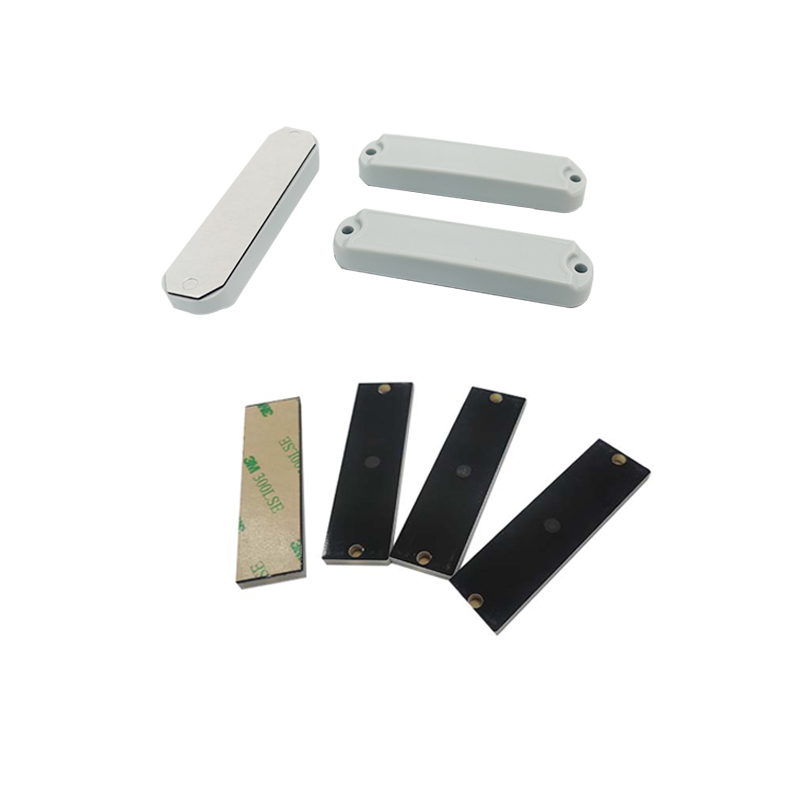
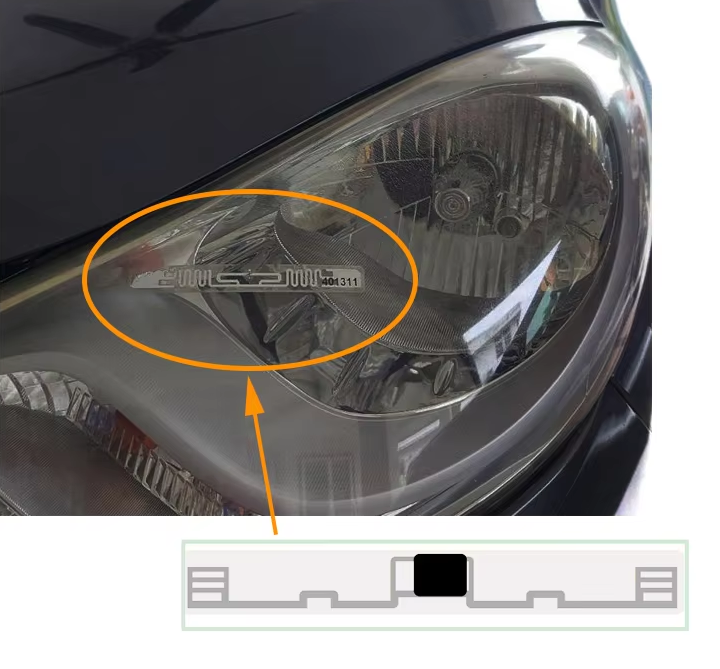
RFID Special Encapsulated Tag
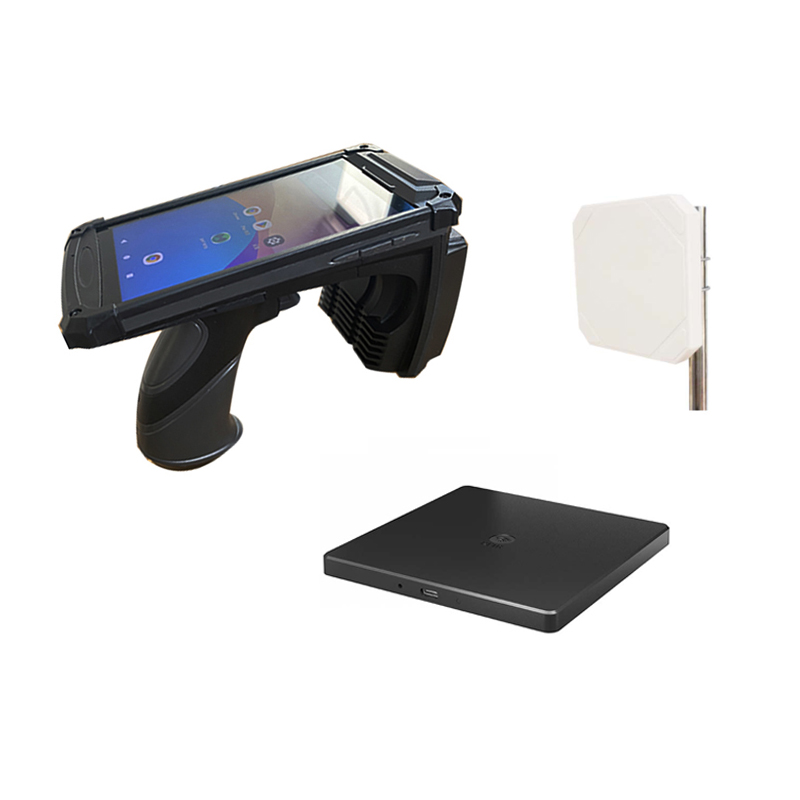
RFID reading and writing devices