
RFID printing equipment
- RFID tags
- Features
- Industry Applications
- Warehousing and logistics
- Animal management
- Healthcare
- Library & Archive Management
- Laundry Management
- Tobacco management
- Item Management
- Jewelry Management
- Power management
- Beauty and Personal Care Management
- Aviation Management
- Asset management
- Event Timing
- Vehicle identification
- Footwear and apparel management
- Food control
- Printing Equipment
- Specialty Tags
- Reader/writer devices
I. RFID PrintingDevice Overview
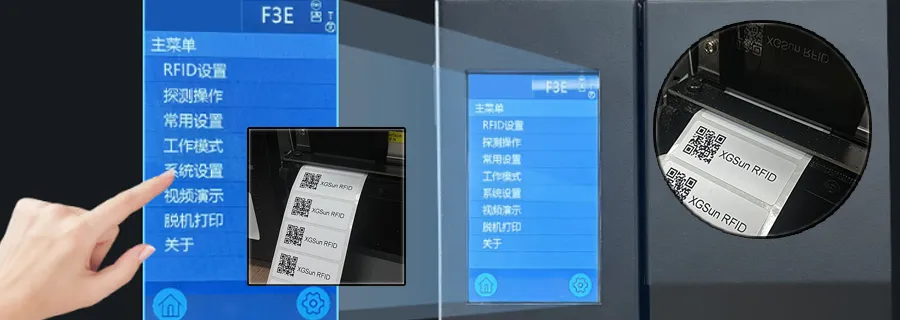
XGSunAn RFID printer is an intelligent printing device that integrates the dual functions of "RFID chip writing" and "traditional graphic and text printing." It is primarily used to complete electronic data writing and encrypted binding for RFID labels, while simultaneously printing visible graphics and text (such as barcodes, text, logos, and traceability codes) on the label surface, achieving integrated generation of electronic and physical identification for "one item, one code."
Compared with ordinary barcode printers, RFID printers have a built-in RFID read/write module and antenna, which can write unique IDs, product information, traceability data and other content into the tag chip while printing graphics and text, without the need for a second operation; they can also automatically verify the chip read/write status to ensure that every label is "data-writable, information-legible, and clearly printed." They are widely used in logistics, retail, food, power, healthcare and other industries that require intelligent traceability and asset control, and are core terminal devices for implementing RFID identification.
Its core advantage lies in breaking the fragmented process between "graphic printing" and "electronic encoding," achieving one-stop completion from tag activation and data writing to visual printing, greatly improving the application efficiency of RFID tags and reducing manual operation errors and costs.
II.Core types of RFID printers
Based on technical principles, functional features, and application scenarios, RFID printers can be mainly divided into the following four categories, catering to the identification needs of different industries:
(I)Classified by printing technology type
1. Thermal transfer RFID printer
Using thermal transfer technology, graphics and text are transferred to the label surface by heating the ribbon, producing clear, wear-resistant, and scratch-resistant printing suitable for labels of various materials (such as PET, coated paper, and synthetic paper). The built-in RFID read/write module can simultaneously write chip data, combining "high-definition visual printing" with "stable electronic encoding." It is currently the most widely used type and is suitable for scenarios with high requirements for label durability and print quality, such as food traceability, asset control, and retail hang tags.
2. Thermal RFID printer
Printing is completed based on the heat-sensitive color development principle of thermal paper, requiring no ribbon, with lower cost and more convenient operation, but the printed graphics and text are easily affected by temperature and humidity, resulting in poor durability. It is only suitable for short-term label scenarios, such as express waybills, temporary identification, and short-term traceability labels for fresh food, and is suitable for industries that are cost-sensitive and have short label usage cycles (such as instant logistics and supermarket fresh food).
(II)Classified by Read/Write Frequency
1. High-frequency (HF) RFID printers
Compatible with 13.56MHz high-frequency RFID tags, with a relatively short reading distance, high reading and writing precision, and strong anti-interference capability, supporting protocols such as ISO 14443 and ISO 15693. Mainly used for short-range precise encoding scenarios, such as printing and writing of medical consumables, pharmaceutical labels, electronic tickets, and smart cards (such as access cards and membership cards), suitable for enclosed scenarios with high requirements for tag reading and writing stability.
2. UHF RFID printers
XGSunUHF printers are compatible with 860-960MHz UHF RFID tags, offering longer read/write distances and support for simultaneous reading and writing of multiple tags, and are compatible with protocols such as EPC Gen2 and ISO 18000-6C. They are primarily used in scenarios requiring batch encoding and long-distance identification, such as logistics parcels, warehouse pallets, power equipment tags, and retail apparel tags, making them the mainstream choice for logistics and supply chain management.
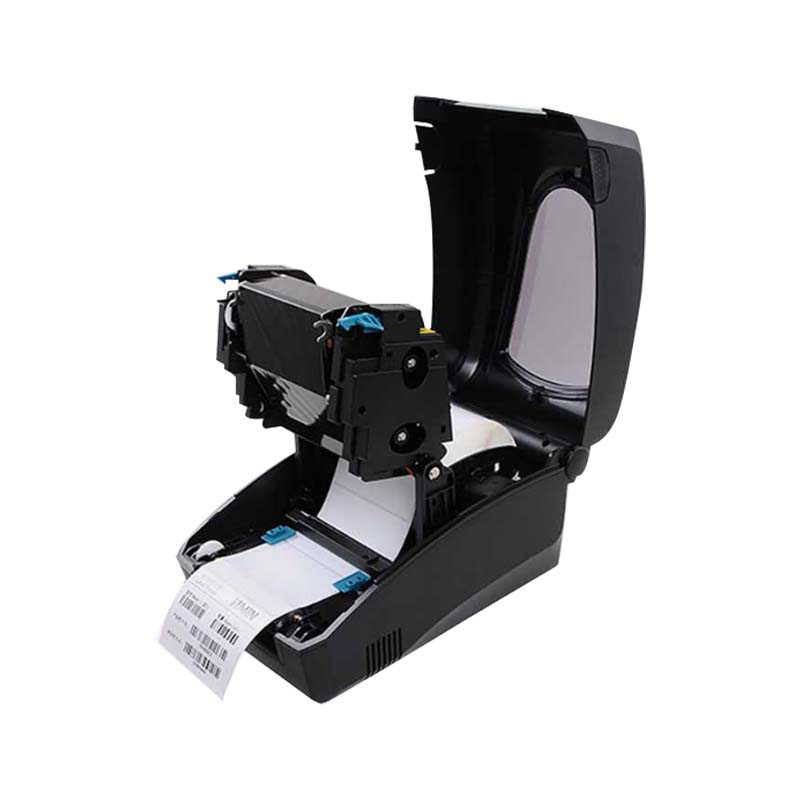
High-frequency RFID Printer
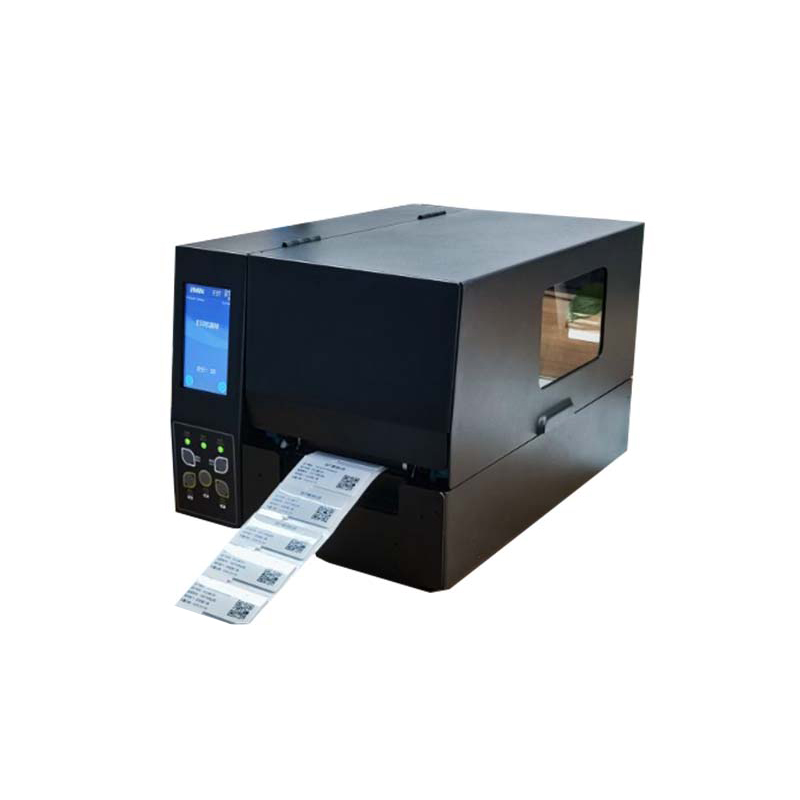
UHF RFID printer
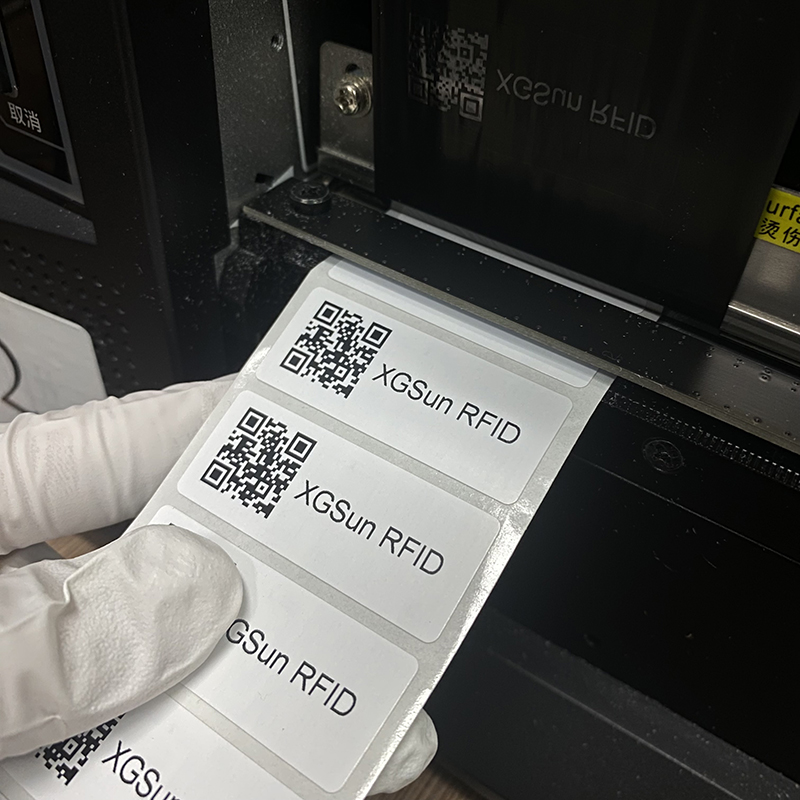
RFID Industrial-Grade AI Printer
(III)Classified by Function and Application Scenario
1. Desktop RFID printer
Compact, easy to operate, and low power consumption, suitable for small-batch tag printing and encoding. Widely used in offices, small stores, laboratories, and other scenarios, such as small e-commerce parcel labels, laboratory sample identification, and retail store hangtags. The equipment has a low unit price and is easy to install and debug, making it the first choice for small and medium-batch applications.
2. Industrial-grade RFID printer
Rugged body, strong stability, and fast printing speed, capable of high-volume printing and encoding, with dust resistance, vibration resistance, and high-temperature resistance, suitable for industrial environments. Some models support automatic paper cutting, label peeling, and batch read-write verification, suitable for high-volume, high-intensity encoding scenarios such as factory production lines, logistics sorting centers, and large warehouses, including food production line labels, logistics pallet labels, and power equipment labels.
3. Portable RFID Printer
Wireless design (supporting Bluetooth and WiFi), lightweight and easy to carry, suitable for label printing and encoding in mobile scenarios such as outdoor inventory, on-site emergency repairs, and door-to-door service. With a built-in battery, the device can be operated handheld to simultaneously complete data writing and graphic/text printing, making it suitable for mobile operation scenarios such as power inspection, outdoor logistics, and on-site traceability, solving the on-site encoding needs that fixed equipment cannot cover.
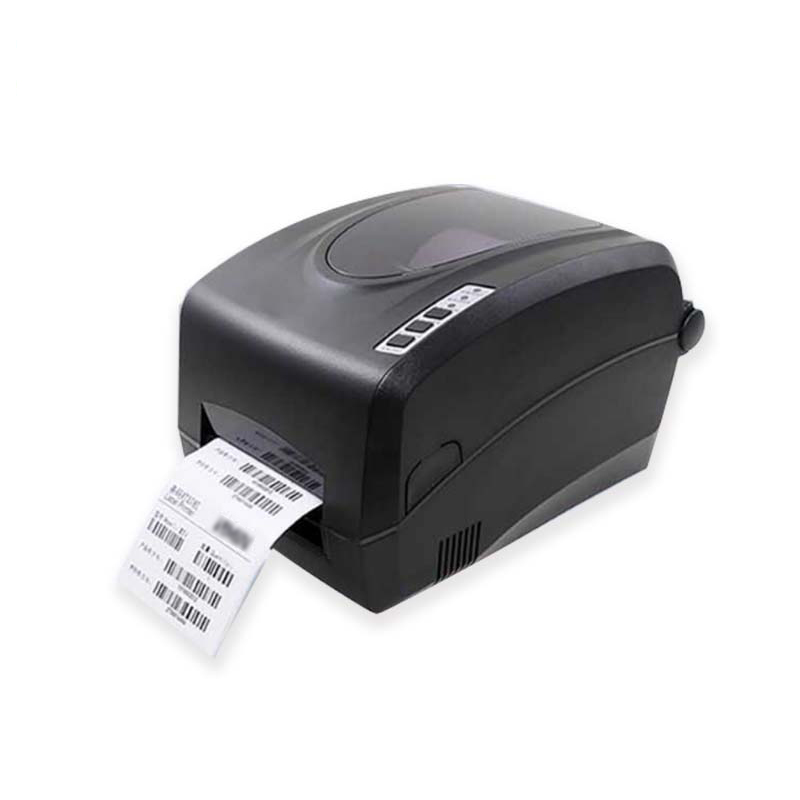
Desktop RFID Printer
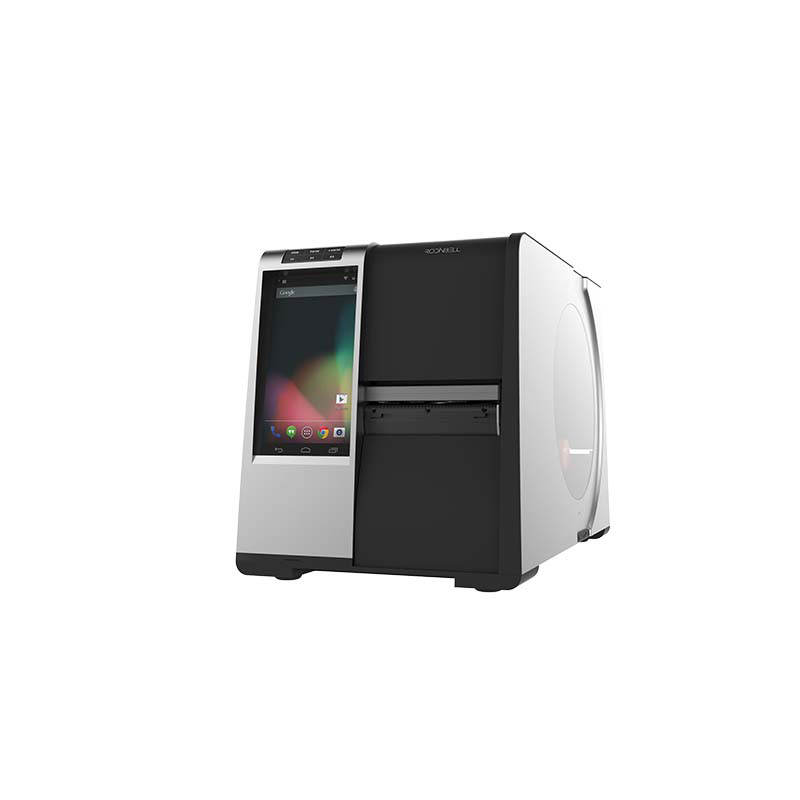
RFID Industrial-Grade AI Printer
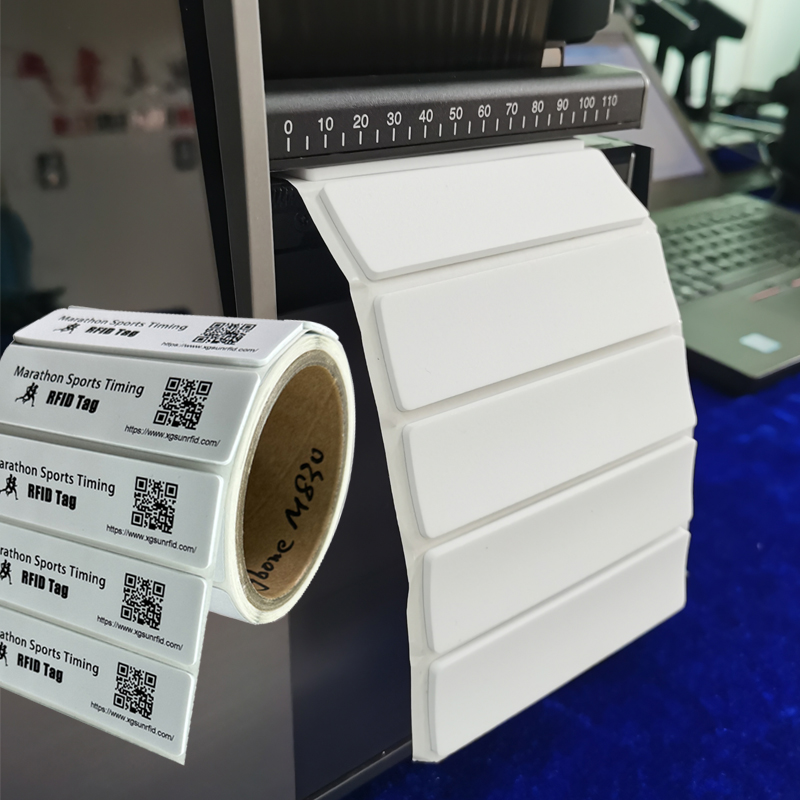
Ultra-thick RFID label printer
As a professional passive IoT solution provider, XGSun is always committed to providing one-stop customized solutions, from precise "label manufacturing" to reliable "data collection" and then to intelligent "decision support", helping you turn IoT data into real business value.